Next weekend you can be at... KHANDOSANGPHUK
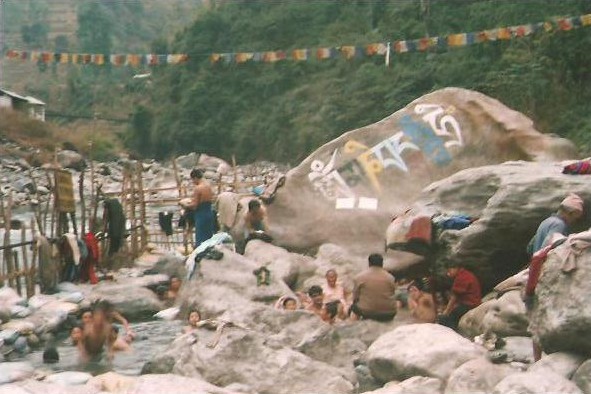
Do you want to spend your weekend lazing in a pool of hot water with healing powers or walk under a canopy of prayer flags to a monastery decorated 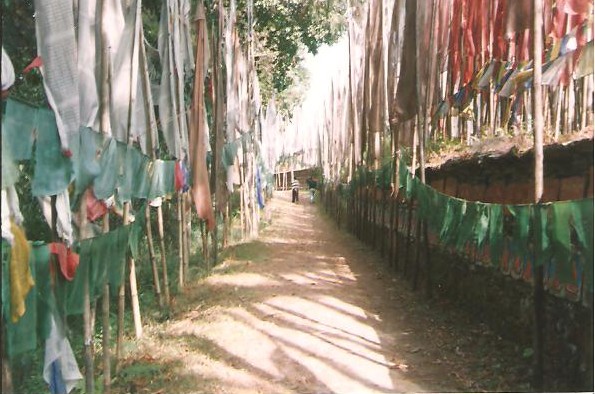 with beautiful stone tablets? Then pack your bags and head for Khandosangphuk and Tashiding, two of the holiest places in Sikkim. The best way to get there is by taking a night train or bus to Siliguri, from where it?s a two-and- a-half-hour jeep ride to Jorethang. Another jeep ride towards Legship later, you arrive in Khandosangphuk. The place is popularly known as Tatopani (tato means hot, while pani is water). A narrow path descends from the main road to the river Rangit. Cross the river on a rickety bamboo bridge to reach the hot spring. The sulphur-enriched water is said to have healing powers, and attracts pilgrims from all over Sikkim, Darjeeling, Nepal, Bhutan and Assam. During the winter months, temporary shelters are built all along the spring to cater to pilgrims, some of whom spend months here. Just above the spring is a small monastery and a stupa, lit up with brass lamps on cold nights. Behind the monastery is the cave of Khandosangphuk, literally meaning ?the cave of the occult fairies?. with beautiful stone tablets? Then pack your bags and head for Khandosangphuk and Tashiding, two of the holiest places in Sikkim. The best way to get there is by taking a night train or bus to Siliguri, from where it?s a two-and- a-half-hour jeep ride to Jorethang. Another jeep ride towards Legship later, you arrive in Khandosangphuk. The place is popularly known as Tatopani (tato means hot, while pani is water). A narrow path descends from the main road to the river Rangit. Cross the river on a rickety bamboo bridge to reach the hot spring. The sulphur-enriched water is said to have healing powers, and attracts pilgrims from all over Sikkim, Darjeeling, Nepal, Bhutan and Assam. During the winter months, temporary shelters are built all along the spring to cater to pilgrims, some of whom spend months here. Just above the spring is a small monastery and a stupa, lit up with brass lamps on cold nights. Behind the monastery is the cave of Khandosangphuk, literally meaning ?the cave of the occult fairies?.
It is considered to be one of the four holy caves in Sikkim. The entrance to the cave, festooned with prayer flags, is wide. But after that, one has to crawl for several feet through a small tunnel (a torch is an absolute necessity),
which opens up into a shrine dedicated to a Buddhist deity.
If you reach the place by late afternoon, you can spend the rest of the day exploring the region. Next morning, after a quick dip in the spring, it?s time to say goodbye to Khandosangphuk. Follow the trail to the main road, where you can take a jeep to Tashiding. The road follows the Rangit, and within an hour, you?re in Tashiding.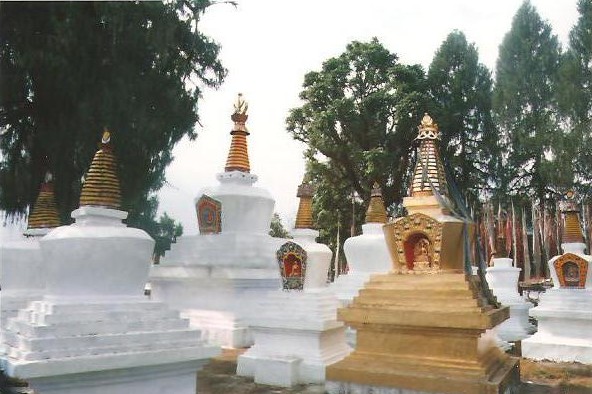
This, too, is a holy place, strewn with stupas, prayer flags and the holy words ?Om Mane Padme Hum (hail the jewel in the lotus)? are carved almost everywhere. On a hilltop overlooking Tashiding is a monastery, built in 1717 by Ngadak Sempa Chembo during the reign of the third Chogyal (king) Chakdor Namgyal. The monastery has some of the most beautiful stone carvings in Sikkim.
After checking into one of the lodges and having a quick lunch, take a walk through the terraced fields, past pretty houses, to the monastery. The entire route is a riot of colours, with the prayer flags fluttering in the wind.
The monastery complex has a number of richly-decorated temples and several stupas dedicated to various Chogyal and holy men. But the main attractions are the colourful stone tablets with holy text and pictures of Buddhist deities.
In the evening, follow the same trail back to Tashiding and spend the night there. The next morning, it?s time to head home. A jeep will take you to Jorethang, and then further on to Siliguri. An overnight journey will take you back to the city, tired but happy.
How to get there
Calcutta to Siliguri Rocket Bus (Rs 215) or Calcutta to NJP train (around Rs 250). Jeeps are available from Siliguri to Jorethang (Rs 80), Jorethang to Tatopani (Rs 30), Tatopani to Tashiding (Rs 30) and Tashiding to Jorethang (Rs 50) on a sharing basis
Where to stay and eat
Khandosangphuk has a few shabby hotels, which are open in winter (January to March). The hotels have no toilets, though. A bed costs about Rs 50 per night and food is available at a nominal cost. You can avoid staying in Khandosangphuk by making a day trip from Tashiding. Tashiding has a few places to stay, like Blue Bird Lodge and Tashiding Lodge. A double-bed room costs Rs 100. Basic food is available at reasonable prices.
(Metro on Sunday thanks reader RANGAN DATTA for this contribution.) |