| The Telegraph - Metro on Sunday 23th July 2006.
Next weekend you can be at ... Pundooah...
Pundooah generally refers to the twin city of Gour, now in Malda, that was once the capital of Bengal. Much closer home, in the district of Hooghly, lies another Pundooah. Both places are home to interesting historical relics. The most prominent among these, in the Pundooah of Hooghly, is a five-storeyed minar (tower) and the ruins of an ancient mosque. 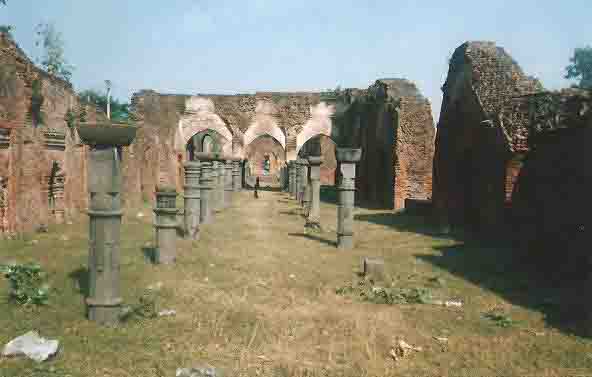
The town is just 61 km from Howrah and can be reached by Burdwan Local, via Main line, in about one-and-a-half- hours.
For the most comfortable journey, take one of the morning trains. As it pulls into the Pundooah station, look right to see the minar towering above the trees and the buildings. The unique shape and construction distinguishes the tower from the chimneys of the numerous brick kilns that dot the region.
Outside the station, you will find rickshaws waiting to take you to the minar. The roads are congested. The unruly traffic adds to the streetside chaos. The rickshaw ride is bumpy, but mercifully you will find yourself in the minar complex before long.
The complex houses the 40-m tower (reduced to 38 m by a massive earthquake in 1886) and the ruins of Bais Darwaza Masjid (22-door mosque). Both structures are maintained by Archaeological Survey of India (ASI) and have been declared monuments of national importance. The area has been cordoned off and no construction is allowed inside.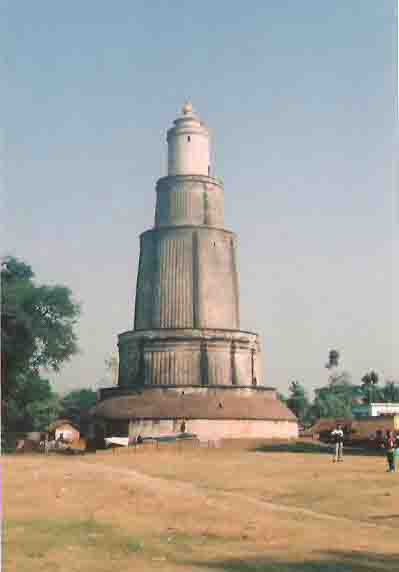
In 1340, the king of Pundooah, Panduraja (said to be a direct descendent of Gautam Buddha) was defeated by Shah Suffiuddin, the sultan of Delhi. Suffiuddin built the tower as a mark of the triumph over his Hindu counterpart. The structure later served as Ajan Minar of Bais Darwaza Masjid, which is also called Bari Masjid (big mosque).
Some historians harbour a different view. They believe that the minar was the tallest portion of a Vishnu mandir built by Panduraja. The temple was torn down by the Muslim invaders. But these historians, too, agree that the tower was retained to mark the victory of the sultan.
However much the experts debate the origin of the tower, they agree on its status as a peerless piece of Bengal architecture. The minar has a 161-step spiral staircase. Although the staircase is in place even now, access to it is prohibited. The tower narrows towards the top and is crowned by a small dome.
The upper part, which had collapsed due the earthquake, has been renovated. The grace and beauty of the original, however, could not be replicated.
Take the keys from the caretaker to enter the Bais Darwaza Masjid complex. Contrary to the name, the mosque contains 24 doors (21 on the front and 3 on the side). The roof once had 63 small domes. It collapsed a long time ago. All that remains of this magnificent brick structure are its walls and a handful of arches standing on columns removed from temples.
The mosque is hardly visited by tourists and can be an ideal picnic spot on a monsoon Sunday. During the Bengali month of Magh, a mela turns the quiet little complex into a buzzing fairground.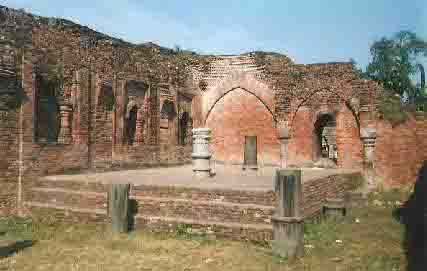
For centuries, Pundooah has been the venue of violence, but this fair, started in 1904, is a classic example of communal harmony. People of different religious beliefs, caste and creed take part in this fair, symbolising the spirit of unity among diversity.
Going :
Burdwan Local, via Main line. Ticket, Rs 13. Trains are available at intervals of one hour, approximately. The journey takes around one-and-a-half hours
Staying :
The tourist stops at Pundooah can be covered in a day. Rickshaws are available from the station to the minar complex. The fare is around Rs 8. Basic food fare is available at roadside eateries.
(METRO ON SUNDAY THANKS READER RANGAN DATTA FOR THIS CONTRIBUTION. PICTURES BY AUTHOR) |