The Statesman – 8th Day, 18th December 2005.
KONARK -- Ode To The SUN TEMPLE
A visit to Konark is like a trip back in time and a journey into the pages of history, writes Rangan Datta
The Konark Sun Temple, the crowning piece of Orissa’s architecture resembles the mighty chariot of the Sun God. Resting on 24 gigantic wheels ( representing the hours of a day) and drawn by seven ferocious horses ( representing the seven days of a week), the temple is a unique piece of architecture probably found nowhere else in the world.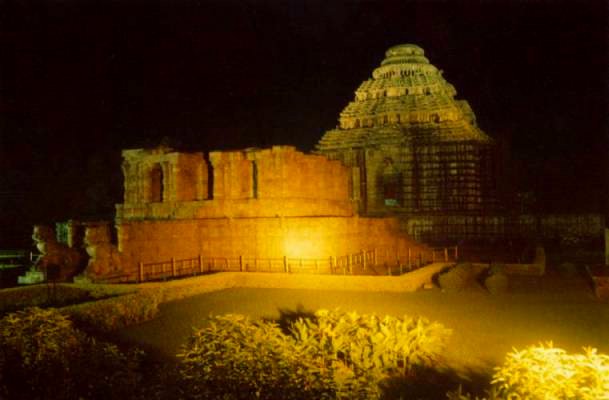 Built in the thirteen century by the Ganga Dynasty King Narasingha Dev I, the temple has long been abandoned and large portions have collapsed. It is not known when the temple was abandoned and when the portions collapsed and till today historians debate these issues. Built in the thirteen century by the Ganga Dynasty King Narasingha Dev I, the temple has long been abandoned and large portions have collapsed. It is not known when the temple was abandoned and when the portions collapsed and till today historians debate these issues.
It was only in the early 18th century that British archaeologist rediscovered Konark. Later on, it acted as a lighthouse for East India Company mariners, who christened it the Black Pagoda. In 1901 Lord Curzon took up the first restoration work. Sand was cleared and the existing part of the temple sealed to prevent it from further collapse.
It is now maintained by the Archaeological Survey of India and it is an UNESCO World Heritage Site. Although they are doing a creditable job but Nature is taking its toll, the hot moist air of the sea is constantly eroding the Temple at an alarming rate. Today the temple seems to be surrounded by a metallic cage. Metallic structure support parts of the temple, which are on the verge of collapsing.
So if you want to see the temple, it is better not to delay further because the earlier you visit the better condition you get to see it in.
Located 35 km from Puri, Konark can be reached along the Marine Drive. Every day thousands of tourists visit the temple on a day trip from Puri, but this is definitely an injustice to one of the most famous landmarks of the 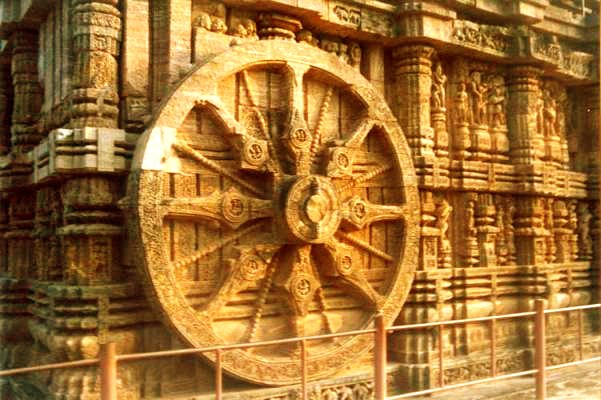 country. Spending the night at Konark not only provides ample time to see the temple but also provides the opportunity to seen the beautifully illuminated temple at night, a sight certainly not to be missed. country. Spending the night at Konark not only provides ample time to see the temple but also provides the opportunity to seen the beautifully illuminated temple at night, a sight certainly not to be missed.
The road to Konark is really good and it takes about an hour to reach. En route lies Chandrabhaga, Konark’s nearest beach. It is one of the few beaches in the country from where you can see the sun both rise and set. The sunset along the edge of the beach turns the sand, sky and the sea into a bright shade of crimson.
Built in traditional style of Orissa, the temple consists of three stages — namely Natmandir (the outer complex), Jagmohan (the central complex) and Garbhagriha (the main complex housing the Deity). Being a sun temple, it faces East and every day the gentle rays of the rising sun illuminate the temple’s entrance.
During the course of the day the sun circles the temple, and in the process illuminates the three magnificent images of the morning, mid-day and setting sun. The Natmandir is approached by a flight of stairs, with two ‘gajasinghhas’ (elephant and lion) standing as sentinels. The roof has long collapsed but the intricately sculptured pillars and the base remain intact. In fact every wall of the temple has exquisite sculptures covering many aspects of life. They range from scenes of love and war to trade and court transactions, from hunting of elephants to teaching of sages and from erotic amorous coupes to mythical creatures. The Jagmohan along with the Garbhagriha form the Chariot of the Sun. The horses are in a decapitated condition but the 24 wheels at the base are more or less intact. Here again a flight of stairs leads to the decorated sealed entrance of the Jagmohan, the most intact part of the temple. The upper section of the Jagmohan is provided with ‘Surasundaries’ playing the cymbals, drums, flute and trumpets. The ceiling of the 200 feet high Garbhagriha has long collapsed and not much of remains except for its richly sculptured walls. 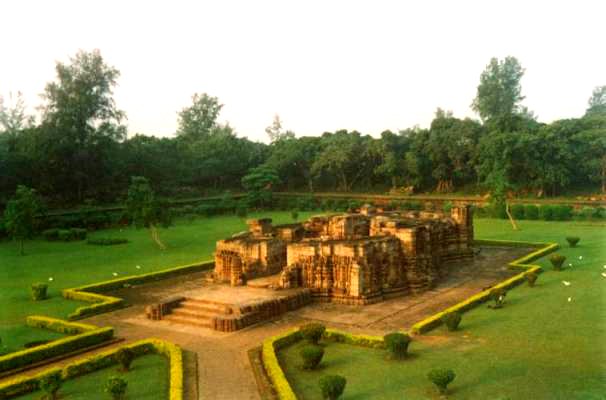
The northern and southern walls are provided with magnificent statues of the Sun God while the western wall contains the statue of the setting sun god. The Sun Temple complex also contains remains of several other temples and structures. The most notable among them is the temple of Chaya (shadow) Devi, consort of the Sun. The richly decorated walls are all that remain of this small but elegant temple. There are beautiful images of horses, elephants, lions scattered all over the complex. The complex also contains the remains of wells, courtyard, storerooms etc. In fact every bit of this highly decorated complex has something to do with history. Located near the complex is the Konark Museum. It houses some of the sculpture removed from the temple including a reconstructed wheel. As not much can be done to prevent the temple from eroding away, the remaining pieces are being removed to the safe custody of the museum to save them from further damage. Visiting Konark is like a trip back in time, a journey into the pages of history and an experience no historical book could ever provide.
Necessary information:
Getting there: Puri can be reached by Jagannath / Puri Express. Regular buses (fare Rs 21) run between Puri and Konark. Taxis are also available. Regular tours are also organised.
Places to stay: OTDC has Pantha Shala and Pantha Nivas. Booking can be done from Utkal Bhawan. Ph. 2244 3653.
Places to eat: A number of roadside eateries provide excellent food at very reasonable prices. |